

Why Are Some Residential Community Projects Difficult to Realize?
When Beneficial Projects Receive Less Interest
In many residential communities, whether housing estates, apartment complexes, or other neighborhoods, a thought-provoking question often arises: Why are some projects that provide significant benefits to residents difficult to implement, while other activities with relatively limited long-term impact repeatedly gain support?
This phenomenon is frequently observed when proposals focused on productivity and long-term benefits—such as fish farming in drainage canals, community vineyards, plastic waste management systems, or resident education facilities—fail to become priorities. In contrast, activities centered on social gatherings, communal meals, entertainment events, mass dancing, or certain celebrations often obtain approval and funding more easily.
Of course, not all community leaders or managers have the same motivations. Many serve sincerely for the benefit of residents. However, organizational governance and management studies often discuss recurring patterns regarding how projects are selected and prioritized within organizations.
Productive Projects Tend to Be More Transparent
One characteristic of productive projects is that their costs are generally easier to calculate and verify.
For example, if a community wishes to develop fish farming in local waterways, residents can easily determine the cost of fish fingerlings, feed prices, the number of ponds being used, and estimated operational expenses. Such information is usually widely available and can be compared with market prices.
As a result, the room for significant price discrepancies is often relatively limited. Residents can independently review the figures and assess whether the proposed budget is reasonable.
Under these circumstances, projects tend to be easier to audit and easier to justify.
Why Are Social Events Often Preferred?
On the other hand, activities such as communal dinners, social gatherings, holiday celebrations, entertainment performances, or other community events possess different characteristics.
The costs associated with these activities are often more difficult for residents to verify in detail.
For example, when an organizing committee purchases satay for hundreds of participants, not every resident knows exactly how many skewers were ordered, the size of each serving, the quality of the meat used, or the actual unit price paid for each portion.
The same applies to other foods such as meatball soup. Residents may find it difficult to determine the exact number of meatballs provided in each bowl, their size, the quality of ingredients used, or the actual price paid to the food supplier.
Other cost components may also vary significantly. The fee for a master of ceremonies (MC), for example, can range from a few hundred thousand rupiah to several million rupiah depending on the agreement. The same applies to decoration costs, documentation services, entertainment, additional catering, event equipment, and various supporting services.
As a result, it can be difficult for the community to determine objectively whether a budget is excessive, insufficient, or still within reasonable limits.
When Budgets Become Difficult to Verify
In organizational governance studies, situations like these are often described as having low cost transparency.
The more difficult it is for the public to identify the specifications of the goods and services being purchased, the more challenging effective oversight becomes.
Unlike the purchase of fish fingerlings, water pumps, or construction materials—which generally have clear specifications—event-related expenses often consist of numerous small components that are difficult to trace individually.
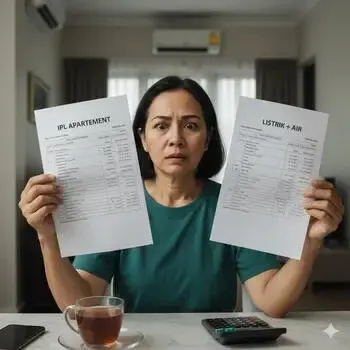
Residents may know the total budget allocated, but they may not necessarily have a comprehensive understanding of every expenditure item.
This is one reason why some social activities and community events are often viewed as having lower auditability compared to physical infrastructure projects or productive development projects.
The Rent-Seeking Phenomenon in Organizations
In political economy studies, there is a concept known as rent-seeking.
This term describes a situation in which an individual or group is more interested in the opportunities to gain benefits from an activity than in the primary benefits generated by the activity itself.
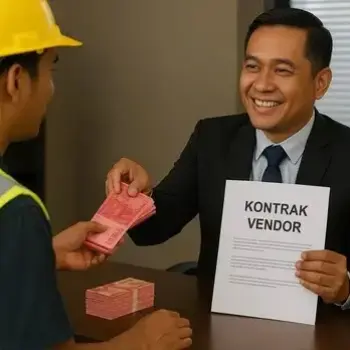
When a project provides substantial flexibility in pricing, vendor selection, or the determination of specifications that are difficult to verify, it may become more attractive to certain parties than projects whose components can be easily examined and audited.
For this reason, in some organizations, projects that offer significant benefits do not necessarily become top priorities. In some cases, what matters more is the degree of budget flexibility available and how difficult the expenditures are to scrutinize in detail.
Balancing the Interests of Residents and Managers
This phenomenon is also often explained through the concept of the agency problem.
In principle, community managers or board members are appointed to represent the interests of residents. In practice, however, the interests of managers and those of residents are not always perfectly aligned.
Residents generally seek long-term benefits, budget efficiency, and improvements in the quality of their living environment. Some managers, on the other hand, may be more interested in projects that provide other advantages, such as popularity, ease of implementation, greater decision-making discretion, or certain economic benefits.
When oversight mechanisms are weak, these differing interests can influence which programs receive priority.
Why Transparency Is Essential
A healthy residential community is determined not only by the amount of money it possesses but also by the quality of its governance.
The more transparent a project is, the easier it becomes for residents to evaluate its benefits and determine whether the costs are reasonable. Conversely, the more difficult an activity is to audit, the greater the likelihood of questions, suspicions, and conflicts arising in the future.
For this reason, well-managed organizations typically promote budget transparency, publication of expenditure details, documentation of purchases, and reporting systems that are accessible to all residents.
Through such practices, every program can be evaluated based on the tangible benefits it provides to the community rather than on the size of the budget that can be spent.
Choosing Programs Based on Benefits, Not Budget Flexibility
Ultimately, the primary goal of residential community management is to improve the quality of life of its residents. Programs that provide long-term benefits should be given equal consideration, even if they do not involve large budgets or offer extensive spending flexibility.
Fish farming projects, environmental greening initiatives, waste management programs, drainage improvements, community education facilities, and various other productive projects often create lasting impacts. Although their financial opportunities or management discretion may be relatively limited, their benefits can be enjoyed by the entire community over the long term.
By contrast, communal meals and social gatherings certainly have important social value because they help strengthen relationships among residents. However, such activities should ideally not become the sole priority, particularly when doing so comes at the expense of programs that offer greater and more sustainable benefits for the community.
This is where resident participation in decision-making becomes essential. When every budget is discussed openly and every project is evaluated according to its benefits, organizations are better able to avoid conflicts of interest and remain focused on their primary objective: the shared well-being of all members of the community.
Read our other articles:
- The Invisible Emerges When Residents' Voices Are Silenced
- Between Glue Intoxication and Residential Community Hallucinations
- Project Transparency in Communities
- The Role of Buzzers in Communities
- The Magic Tricks Behind Community Expense Reports