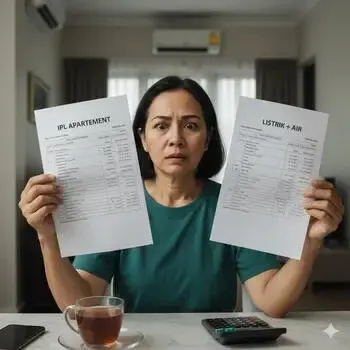


Why Will Citizens' Indifference Causes a High Price?
The Importance of Transparency to Prevent Your Financial Losses
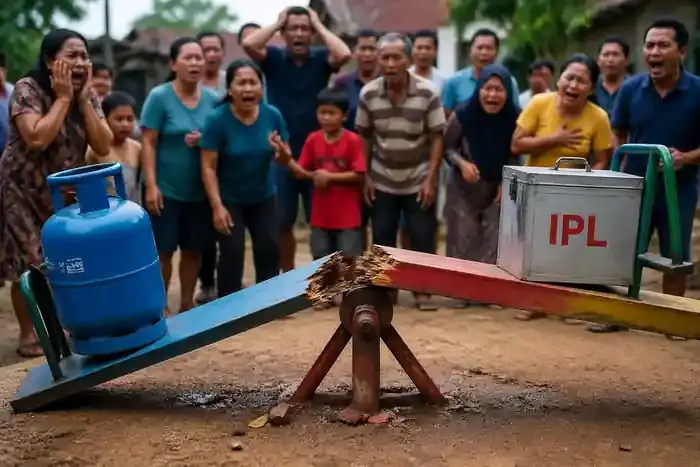
In many communities—from the group level, neighborhood association (RT/RW), housing complexes, apartments, to community service (PPPSRS)—the money used for projects typically comes from residents' contributions. This means that every rupiah spent is not "administrator money," or "vendor money," but rather collective money. However, in practice, residents are often positioned as spectators, not fund owners.
This is where a major problem arises: when residents are passive, indifferent, and uninformed, the small power that manages large sums of money is easily abused. This indifference and ignorance will be paid dearly—not by administrators, not by vendors, but by the residents themselves through increased contributions, poor project quality, silenced voices, and prolonged conflict.
- Community Projects: Tendering or Direct Appointment?
According to sound governance principles, projects using collective funds should go through an open process: planning, specifications, price comparisons, and rational vendor selection. This mechanism is often called a tender, although it can be simple.
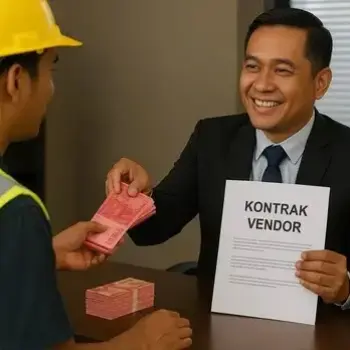
However, in many communities, the common practice is direct appointment. This means that administrators appoint vendors without an open comparison process. Legally, in small communities, there are no strict regulations requiring tenders, as there are for state projects. This legal loophole allows the practice of direct appointment to flourish.
The issue is not whether it is permissible or not, but rather the risks involved:
- Prices are easily inflated because there are no comparisons.
- Specifications can be blurred to suit specific vendors.
- Personal relationships, not quality, are the basis for decisions.
- Citizens don't know whether prices are fair or not.
If citizens are passive, direct appointments shift from a "practical method" to a "tool of power." Those close to the management get projects. Those who are critical are considered disruptive.
- The Corruption Eradication Committee and the Limits of Legal Oversight
Many citizens hope that if there are irregularities, they can simply report them to the Corruption Eradication Commission (KPK). But the reality is not that simple.
The KPK has limited authority over corruption cases involving state officials or those that meet certain elements of the criminal law on corruption. At the neighborhood unit (RT), neighborhood unit (RW), or PPPSRS (Community Service Post) level, administrators are not state officials. The funds managed are also not from the state or regional budgets.
As a result:
- Many irregularities remain untouchable by the Corruption Eradication Commission (KPK).
- Law enforcement officials often consider these cases "internal" matters.
- Citizens are encouraged to resolve these cases amicably, even if the money involved is hundreds of millions or even billions of rupiah.
This legal loophole allows manipulation to flourish. Administrators know: legally, they are relatively safe. As long as it's not too vulgar, the risk of criminal action is small. This emboldens small powers.
When the law is absent, the only realistic counterbalance is citizen oversight.
- Preventing Manipulation: What Can Citizens Do?
Because there are no strong legal loopholes, prevention must be implemented within the community. Not through emotion, not through slander, but through rational mechanisms.
Some steps that residents can take:
- Request a written project plan.
- Request a detailed job specification.
- Request at least two or three price comparisons.
- Request a public presentation of the comparison results.
- Request a written justification for selecting a particular vendor.
The goal isn't to regulate the technicalities, but to ensure the process is sound.
If citizens are active:
- Management thinks twice about price manipulation.
- Vendors know they're being monitored.
- Decisions must be accountable.
If citizens are passive:
- All decisions take place behind closed doors.
- All decisions and use of money will be conditioned.
- Citizens only know the results, not the process.
- If there's a problem, it's too late.
This is where the saying becomes true: indifference and stupidity will be paid dearly. Not in theory, but in money, conflict, and broken trust.
- Citizen Participation: Active or Passive, Which is More Expensive?
Many people say, "I don't want a fuss, the important thing is peace.", "For the sake of community harmony.", "We have to socialize, so just accept it.", "We'll just leave it to our elders.", "It's been the norm for a long time, the important thing is that someone takes care of it."
However, this apparent peace often comes at a very high cost.
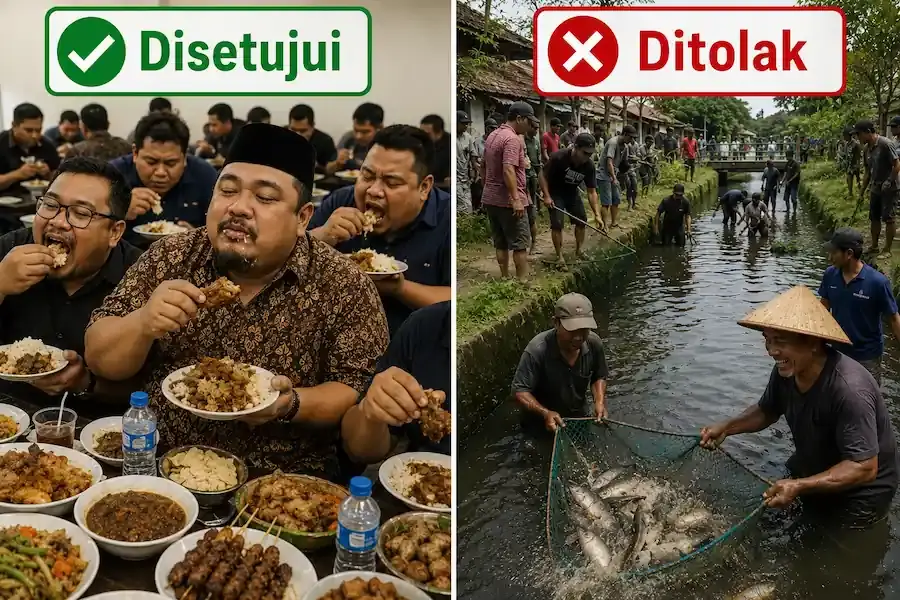
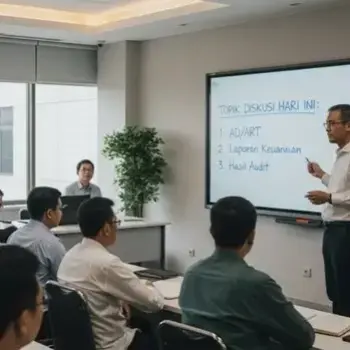
Warga Aktif: Menggunakan Hak Bertanya
Benefits of being an active citizen:
- Project pricing is more reasonable.
- Work quality is better maintained.
- Conflicts of interest are less likely to arise.
- Trust is built through process, not promises.
- Contributions are more manageable.
Disadvantages:
- Almost nothing, just ask and read.
But all of that is a “small cost” to prevent a “big loss”.
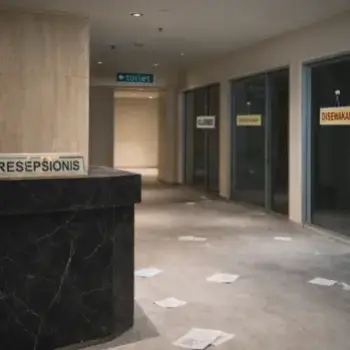
Passive Citizens: Quiet and Calm, But Expensive in Expenses!
Pseudo advantage:
- Not tired.
- Not noisy.
- Not dizzy.
Real disadvantages:
- Project prices are easily manipulated.
- Quality is easily sacrificed.
- Conflicts of interest thrive.
- Contributions increase without clear justification.
- Residents lose control of their own money.
Passive is convenient, but expensive. And the one paying isn't the administrator, nor the vendor, but the residents (you as the owner).
Conclusion:
Managing community funds isn't about trusting or distrusting administrators, but about ensuring that small powers handling large sums of money don't operate unchecked. As long as legal loopholes remain wide open and institutions like the Corruption Eradication Commission (KPK) cannot intervene in all community cases, the only real defense is the awareness and participation of residents themselves.
Ignorance and indifference are not neutral stances. They are both sources and breeding grounds for misconduct. When residents refuse to know, ask questions, and participate, manipulation flourishes. And those who suffer the consequences are not administrators or vendors, but the residents themselves—through rising fees, shoddy projects, prolonged conflict, and a loss of trust.
Advice for Residents:
First, don't be afraid to ask questions. Asking questions doesn't mean accusing. It's a right, because the money being used is shared money.
Second, make it a habit to ask for figures and the basis for decisions. Every project, every expense, and every contribution increase must have a logically explainable reason.
Third, encourage an open process. At a minimum, have price comparisons, work specifications, and written reasons for choosing a vendor.
Fourth, build a culture of participation. Active citizens are not disruptors, but guardians of the common good.
Fifth, don't be satisfied with general phrases like "It's normal," "We've compared them," or "Just trust me," "The management is a religious expert," "The management is honest," or "We should be grateful for the management." Shared funds should not be managed solely on trust, but with a system that can be monitored, with facts, documents, data, and logic.
Remember this sentence as a guide:
Ignorance and indifference will always foster corruption, and the price will be steep. This is why Indonesia will never be free from corruption, as so many citizens are involved, right down to the lowest levels.
If citizens are unwilling to pay the price in the future, then the small price to pay now is: Caring, Asking, Seeing, and Reading.
In communities, small powers can, and often do, manage large sums of money, even billions of rupiah. If left unchecked, this small power can easily turn into arbitrary power. Because legal loopholes remain large and the Corruption Eradication Commission (KPK) cannot always intervene, the only realistic defense is public awareness.
Transparency is not about distrust, but about ensuring a healthy process. Participation is not about picking fights, but about safeguarding shared funds. And indifference is not neutral—it favors misuse.
Ignorance and ignorance are costly. Sooner or later, the bill will come to you!
FAQ
- Are community projects legally required to be tendered?
At the community level, such as the neighborhood association (RT), community association (RW), or community-based public procurement (PPPSRS), there are no national regulations requiring formal tenders like government projects. However, ethically and for good governance, price comparisons and an open process are highly recommended to prevent abuse. - If there's no tender, is it necessarily wrong?
Not always. Direct appointments can be made if the reasons are clear and/or urgent. Problems arise if direct appointments are made continuously, without comparison, without rational justification, and without transparency. - Why can't the Corruption Eradication Commission (KPK) intervene?
Because the KPK handles corruption involving state officials or state funds. In communities, administrators are not state officials, and funds are not from the state budget (APBN/APBD), so many cases fall outside the KPK's purview. - What are the biggest risks if residents are passive?
The risks are price manipulation, poor quality, conflicts of interest, and irrational fee increases. All of this occurs because there is no oversight. - Do residents have to intervene in the technical aspects of the project?
No. Residents do not need to manage the technical aspects, but they do need to monitor the process: is there information about activities, vendor summons and comparison vendors, are the reasons reasonable, and can the decisions be explained openly.
Also read: