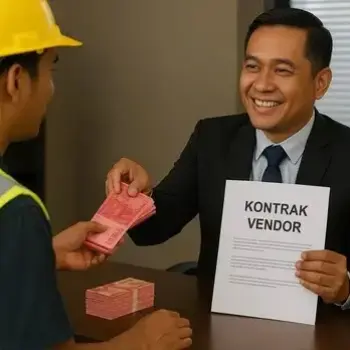


Beware of Donations and Social Parasites in Residential Environments
When Worship Becomes a Consumption Event
Every Ramadan, both in apartments and in various neighborhood communities, such as neighborhood associations (RT/RW), spearheaded by the RT/RW/P3SRS, they often hold iftar gatherings. Ideally, this activity aims to strengthen relationships, increase social solidarity, and foster empathy for others.
However, in practice, phenomena often arise that merit critical scrutiny. What should be a simple event turns into a feast of consumption. Tables are laden with various dishes, the menu numbers dozens or even dozens of items, and the atmosphere resembles more of a culinary celebration than a moment of spiritual reflection.
Ironically, these events are often funded through community donations. However, the narrative conveyed is usually very simple and sounds beautiful: "This is from us, for us."
Ramadan, which should be a month of self-control, sometimes becomes a festival of consumption.
Also read other articles:
Slogans That Sound Beautiful, But Sometimes Hide Problems
In many residential areas, we often hear a slogan that sounds very ideal: “from us, for us.” This phrase feels warm, inclusive, and reflects the spirit of community togetherness. In principle, the idea is indeed in harmony with the culture of gotong royong (mutual cooperation), that residents contribute to one another for the common interest. However, in daily social practice, a beautiful slogan does not always run as beautifully as its meaning.
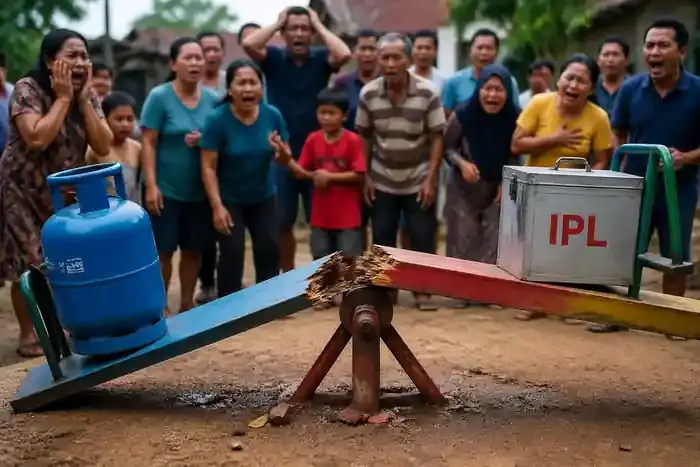
In some situations, the expression “from us, for us” can change into a mere wrapper for activities whose mechanisms are not entirely clear. Fundraising is done quickly, sometimes without adequate deliberation, without an agreement that is truly understood together, and not always followed by a detailed report on the use of funds. At this point, a phenomenon emerges which in social science is often associated with the Free Rider Problem: namely a condition when some people enjoy the benefits of a collective system without providing a balanced contribution.
In residential environments, this phenomenon is often felt in a simpler but real form. Funds are collected from many residents, but decisions on the use of funds are mostly determined by a handful of parties. The event then takes place merrily for one night, often in the form of communal consumption, while afterward, there is a certain group that takes home the remaining results of the consumption, which of course the amount and value are not small, and what remains is only documentation of the activity, without sufficient explanation regarding how the funds were used. In a situation like this, some residents begin to feel an inequality of participation. There are those who contribute routinely, but there are also those who more often attend as enjoyers of the activity.
This pattern is what some social observers often call a social parasite in a small community, not in a biological sense, but as a description of behavior when someone takes more benefits from the togetherness system compared to the contribution they provide. The phenomenon of “Social Parasites in Residential Environments” does not always happen openly. It often appears slowly through habits: an increasingly frequent invitation to gather, increasingly routine fundraising, but increasingly vague accountability mechanisms.
Therefore, a healthy community needs to understand that a slogan of togetherness alone is not enough. Truly healthy togetherness requires three things that run concurrently: deliberation, transparency, and balance of contribution. Without these three things, the sentence “from us, for us” risks changing its meaning: no longer about residents' mutual cooperation, but merely becoming a narrative that covers up the inequality in the practice of togetherness itself.
From Silaturahmi to a Consumption Festival
This phenomenon reflects a change in meaning in some socio-religious activities in the community environment. A communal iftar which was initially intended as a simple silaturahmi (gathering for connection) often develops into a collective consumption event that grows larger from year to year. The more menu items served, the merrier the event is considered. Slowly, the focus of the activity shifted. No longer solely about togetherness or the spiritual value of Ramadan, but about food variations, completeness of dishes, and how “wow” the event looks in the eyes of the community.
In some cases, social dynamics also play a role. Activities wrapped in a narrative of togetherness, often using slogans such as “from us, for us”, which sometimes without realizing it can serve the interests of certain groups more, or even become a social stage for individuals who want to gain recognition, influence, or a symbolic position in the community. Things like this do not always happen consciously or intentionally.
However, when social activities start to be more oriented toward event imagery, social influence, or strengthening the position of certain groups, then the initial essence of the activity, namely silaturahmi and simplicity, can slowly fade. At this point, the community needs to reflect again. Because if not, activities that were initially born from the spirit of togetherness can shift into a tradition of consumption that continues to grow, but is increasingly far from the value of self-control which is precisely the core of Ramadan.
Ramadan Irony: Restraining Hunger by Day, Overindulging by Night
Ramadan is essentially a training in self-control. It teaches humans to restrain hunger, restrain lust, and feel empathy for those who are lacking. However, when buka puasa (iftar) turns into a food party, that spiritual message slowly fades. What remains is only a social ritual filled with symbols of consumption. This paradox becomes even clearer when donations collected from many people end up as abundant dishes for people who are actually not in need.
How to identify the presence of Social Parasites in a residential environment?
To recognize the presence of social parasites in a residential environment, it is actually enough to see repeated behavior patterns. In social science, this is often associated with the Free Rider Problem concept, which is a condition when someone enjoys the benefits of a collective system without providing a balanced contribution.
In the neighborhood (RT/RW) environment or residential organizations such as the Association of Apartment Owners and Occupants (P3SRS), the signs are usually quite visible: very active in proposing activities that require joint funds, diligent in attending when the event takes place, but financial contributions or operational responsibilities are not always proportional.
Transparency of funds is also often a weak point, the names of contributors are announced during fundraising, but the report on the use of funds after the event is not explained in detail. In some cases, residents also see other patterns, for example, the activity organizer has very flexible time to organize various fundraising or events, while their fixed income source or professional activities are not very clear in the eyes of the neighborhood.
Things like this certainly do not immediately indicate a problem, but if such patterns appear repeatedly, the community needs to be wiser and more critical so that the spirit of togetherness does not turn into a system that only benefits certain parties.
Restoring the Meaning of Communal Iftar
Communal iftar is not something wrong. This tradition can be a means to strengthen social relationships and strengthen the sense of togetherness. However, that value can only be realized if the activity is carried out simply and transparently.
Simplicity of the menu, openness in fund management, and voluntary participation are important principles that need to be maintained. Without that, the slogan 'from us, for us' will only be a sweet sentence covering up excessive collective consumption practices.
Conclusion: Donation Transparency is Part of Ramadan's Values
Ramadan should be a momentum to strengthen the values of simplicity, honesty, and social concern. In the context of community activities, both in the RT/RW environment and residential organizations such as P3SRS, the spirit of togetherness is often realized through the collection of residents' donations.
However, that spirit also demands one thing that is no less important: transparency and accountability for the use of funds. In practice, fundraising is sometimes packaged very attractively at the beginning. The names of contributors are announced openly—for example with narratives such as “A contributes IDR 1,000,000, B contributes IDR 500,000,” and so on. A pattern like this often becomes a kind of social click-bait, which encourages resident participation through the psychological effect of togetherness.
Unfortunately, transparency often stops at the fundraising stage only. When the event is over, what usually appears is only photos of activities or documentation of togetherness, while the report on the use of funds is not explained in detail. Even if there is a report, it is often presented in the form of package expenses or “bulk” numbers, for example, “consumption IDR 5,000,000” or “event package IDR 7,000,000” as well as without explanation of items, quantity, or unit price.
Reporting models like this make it difficult for residents to perform simple verification regarding how the funds were actually used. In the context of healthy community management, practices like this should be a common concern. Transparency is not just a formality, but a form of respect for the trust of residents who have contributed. Because in the end, healthy togetherness is not just about gathering and sharing food. It is also about clarity, responsibility, and openness in managing public funds.
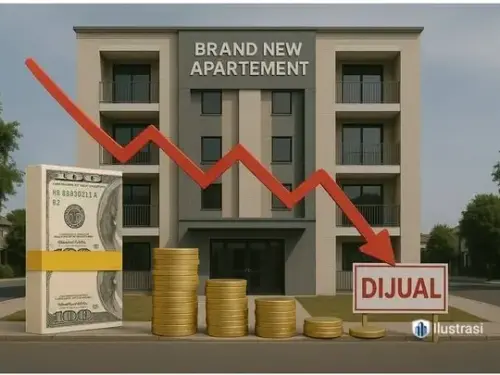
Amidst global economic conditions that are not always stable, and in the spirit of Ramadan which emphasizes self-control, a wise community will choose to be more careful in managing donations rather than just spending them in the name of togetherness. Because in social life, being wary of the possibility of “taking advantage of the situation” is often far wiser than wasting money senselessly under the pretext of solidarity.
FAQ
1. Is communal iftar a good tradition?
Yes, as long as it is done simply and aims to strengthen silaturahmi. Problems arise when the event turns into an arena for excessive consumption.
2. Why do communal iftar events often become very luxurious?
This is usually influenced by social pressure to make the event look merry and prestigious, so the amount of food menu becomes more, even though the participants are very few.
3.Is collecting donations for communal iftar events problematic?
Not always. However, fundraising must be done transparently and accompanied by a correct expenditure report, to respect the donors, and in accordance with the principles of accountability, so that funds are not utilized by certain parties.
4. What is the social impact of overly consumptive events?
Such activities can obscure the spiritual meaning of Ramadan and make it merely an annual consumption tradition, and become a tool for the legitimacy of the power of groups/individuals/figures, to show their power.
5. How to make communal iftar events remain meaningful?
By maintaining simplicity, transparency of funds, correct and non-manipulated reporting (not just pictures and “bulk” packages) and ensuring the main goal of the event is togetherness and prioritizing worship values.
Read other articles too: