
From RT/RW to P3SRS: when procedures are ignored, residents remain silent, and transparency weakens.
Community governance issues are not limited to the neighborhood unit (RT/RW) level, but are now also extending to apartment communities. In the context of apartment buildings, the Association of Apartment Owners and Residents (P3SRS) is often perceived as an ordinary social community, even though in terms of function and authority, P3SRS plays a strategic role that directly impacts the finances, assets, and quality of life of all apartment residents.
P3SRS and the Concept of Community: Social vs. Governance
Socially, the P3SRS (Regional Community Empowerment) does share similarities with neighborhood associations (RT/RW). Both serve as gathering places for residents within a neighborhood, with members, elected administrators, and a meeting or deliberation mechanism. However, the difference lies in the scope of authority.
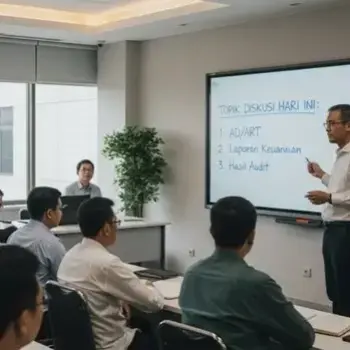
The P3SRS is not simply a social community, but rather a formal entity established under statutory regulations and bound by the Articles of Association (AD/ART). Within this framework, the P3SRS carries out governance functions, not just social ones.
The Absolute Power of Community When Citizens Remain Silent
Unlike neighborhood associations (RT/RW) within the urban village structure, the P3SRS is not affiliated with any government institution. All of P3SRS's authority stems from laws and regulations and internal bylaws (AD/ART), not from the state's administrative structure.
When residents remain passive and do not exercise their rights, P3SRS decisions can become de facto absolute. This is not because the law grants them unlimited power, but because there is no corrective mechanism within the community itself.
Apartment residents cannot complain about P3SRS governance issues to the RT/RW or urban village, as P3SRS's domain is collective private management. Without resident participation, oversight, or resistance, every management decision—from financial policies to vendor appointments to projects—will proceed without effective social control.
In situations like this, residents' silence is not a neutral stance; it creates space for P3SRS's power to operate without practical limits, even though it remains normatively limited by law and the AD/ART.
Election of P3SRS Management in Accordance with Articles of Association and Regulations
In accordance with the Articles of Association and applicable legal provisions, P3SRS administrators must be elected by owners or residents through clear, measurable, and accountable procedures. These procedures include the determination of voters, the voting mechanism, the quorum, and the ratification of election results.
Ideally, all these stages are announced openly and accompanied by documentation and official reports. This aligns with the principles of transparency and accountability.
Practice Deviations: Elections Without Voters and Procedures
In practice, irregularities are often found at both the neighborhood association (RT/RW) and community-based community service (P3SRS) levels. Administrators can emerge without clarity on who their voters are, without verifiable procedures, and without election reports. In such situations, the term "elected" becomes meaningless.
From a legal perspective, this situation can be categorized as a process that fails to meet the principles of good governance, as it does not comply with the Articles of Association (AD/ART) and cannot be transparently reviewed.
Social Legitimacy and Informal Power
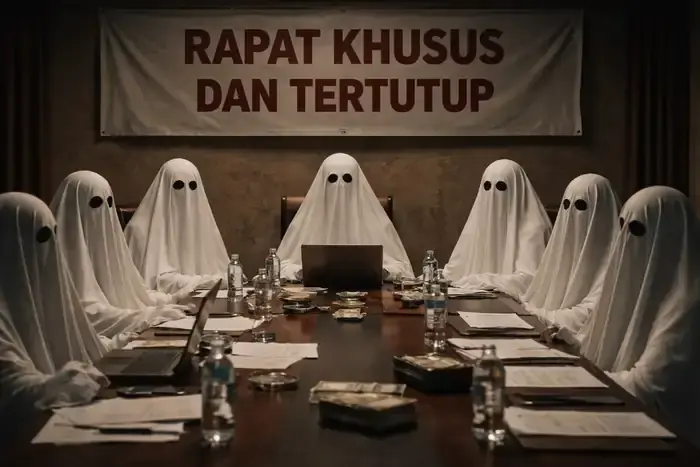
To compensate for the lack of formal procedures, informal social legitimacy often emerges. Administrators or certain parties refer to themselves as "elders," "seniors," "elders," "role models," "respected people," "sacred descendants," or similar terms. These terms are not recognized in law or bylaws, but are used to build social acceptance.
In this context, P3SRS administrators potentially play only a symbolic role, while strategic decisions are controlled by invisible powers.
Power Relations, Finance, and Project Management
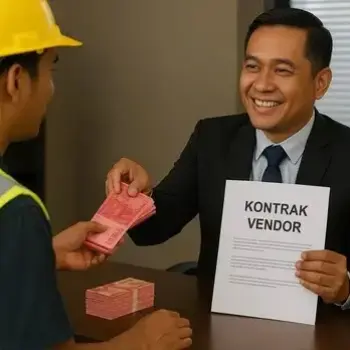
Non-transparent governance practices almost always intersect with financial aspects. Authority over vendor appointments, project management, and maintenance budgets become vulnerable when public oversight is weak.
From a Good Corporate Governance (GCG) perspective, this situation contradicts the principles of transparency, accountability, responsibility, independence, and fairness as stipulated in regulations.
Impact of Losses on Residents
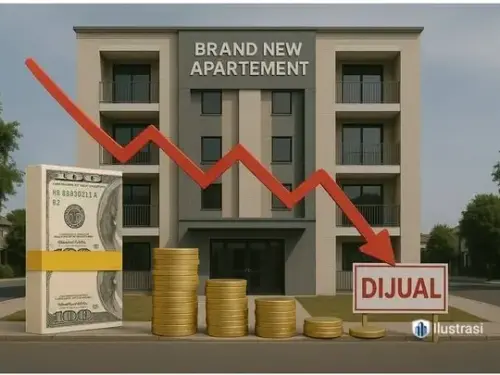
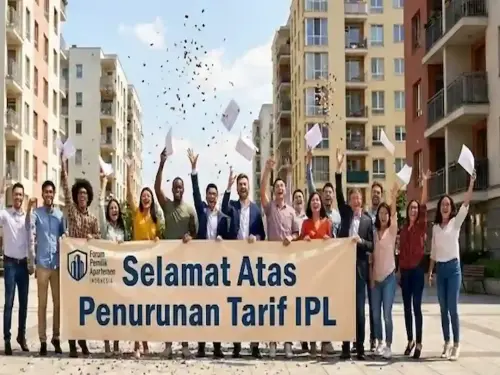
The direct impact of deviant governance is detrimental to residents. Contribution fees can increase without a clear basis, service quality declines, and complaints go unaddressed.
Residents' indifference and disregard for the management selection and oversight process actually reinforces these non-transparent practices and fosters the potential for abuse of authority.
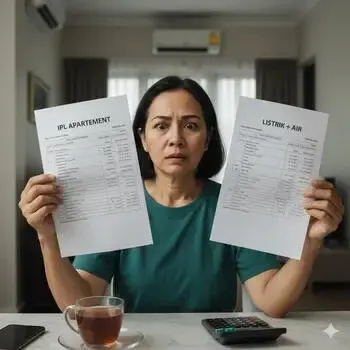
In practice, this situation is evident in the setting of management fees (IPL) that increase without detailed explanation, repeated vendor appointments to the same party without a transparent process, and the implementation of large-scale maintenance or renovation projects without specification reports, price comparisons, or evaluation of results. When residents simply pay and don't ask questions, the decision is treated as final and unchallenged, even though its impact is directly felt by all residents. At this point, the lack of transparency and citizen participation shifts the authority of the P3SRS from a collective mandate to a near-absolute practical power.
Ongoing Reporting and Transparency Obligations
In accordance with GCG principles and regulatory requirements, every management process must be accompanied by clear and transparent reporting. Reporting should cover the initial process, implementation, and final results.
The board election report, financial report, and activity report are not administrative formalities, but rather instruments of citizen oversight to ensure governance is carried out in accordance with the Articles of Association (AD/ART).
Conclusion: Citizen Participation as the Key to Governance
P3SRS cannot be treated as an ordinary social community. It is a governance entity that requires active citizen participation, adherence to the Articles of Association (AD/ART), and the application of GCG principles and transparency.
Without citizen involvement, the management risks becoming an invisible, informal representation of power, ultimately detrimental to the apartment community itself.
FAQ
1. Is the P3SRS the same as an RT/RW community?
No. However, socially, there are similarities, but the P3SRS has broader legal and financial authority.
2. Is the election of administrators required to comply with the Articles of Association (AD/ART)?
Yes. The election of administrators must comply with the Articles of Association (AD/ART) and applicable regulations.
3. What if there are no procedures and AD/ART?
This is a more serious matter than having AD/ART but not implementing them. Residents can request the AD/ART first or report the matter to a higher level.
4. What are the risks of elections without clear procedures?
The risks include a lack of transparency, weak accountability, and the potential for abuse of authority.
5. Are terms such as "elder," "senior person," "elderly person," "role model," "respected person," and "sacred descendant" recognized in the laws of the Republic of Indonesia and/or the P3SRS AD/ART?
No. These terms are social in nature and have no legal basis.
6. Why is citizen participation so important?
Because citizen participation is the primary mechanism for monitoring and preventing deviant governance practices and indications of group corruption.
Read other articles: