

Environmental Fund Transparency and Unnecessary Fear
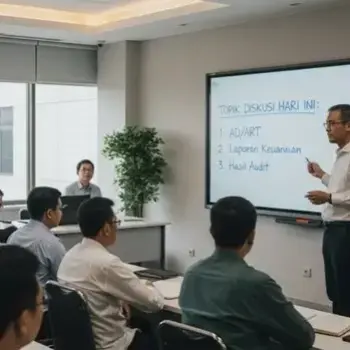
In community life, whether in neighborhood associations (RT/RW), housing complexes, or vertical housing management such as those managed by P3SRS, one issue remains a sensitive topic: reporting on the use of collective funds.
These funds can come from community contributions, activity contributions, neighborhood security funds, and even maintenance fees such as the Environmental Management Fee (IPL). In principle, these funds do not belong to anyone personally. They are collective funds, generated from the contributions of many people for the common good.
Therefore, questions about their use are actually quite natural.
A resident might ask:
"What is the total amount of funds collected?"
"What are they used for?"
"Is there a report that can be shared with residents?"
In a healthy organizational system, these kinds of questions are considered part of the transparency mechanism.
However, in everyday social practice, it's not uncommon for simple questions to escalate into uncomfortable situations. Instead of being answered with a report or explanation, questioners receive a defensive response: ranging from being accused of being "too critical," "not trusting the management," "not obeying elders," to the more extreme, legal threats, specifically citing the Electronic Information and Transactions Law (UU ITE).
In this space, a fairly common phenomenon emerges: someone asks about the use of funds, the transparency of activities, or organizational decisions, only to suddenly receive the threat, "Be careful, this could be subject to the ITE Law. I'm a legal professional!"
Such statements are often used to close discussions before they even begin.
At this point, public discussion often shifts direction.
It's no longer about the substance of financial reports, but rather about fear of legal threats.
In fact, in modern organizational governance, whether in community groups, social organizations, or housing management bodies, transparency and accountability are not signs of distrust. Rather, they are the foundation for maintaining that trust.
Read other articles:
Without transparency, reports turn into assumptions.
And assumptions left unchecked for too long often become the source of new conflicts.
Therefore, it is important for the public to understand one fundamental point:
asking about the management of shared funds is not a violation of the law.
In fact, in many organizational systems, including government-regulated housing management, reporting to members or residents is part of the administrator's responsibility.
This is where the discussion of the Electronic Information and Transactions Law (ITE Law), public criticism, and the phenomenon of legal threats need to be placed in a clearer context:
is the law used to protect the public, or is it used as a tool to avoid questions that should be answered?
The question is simple: is asking about the use of funds, or the transparency of activities, a violation of the law?
To answer this, we need to re-understand the original purpose of the Electronic Information and Transactions Law (ITE Law) itself.
The True Purpose of the ITE Law
The ITE Law was first enacted in 2008 and was subsequently updated through Law Number 19 of 2016 concerning Amendments to the ITE Law and the most recent revision in Law Number 1 of 2024 concerning the Second Amendment to the ITE Law.
The primary purpose is actually quite clear:
- Protecting electronic transactions
To ensure legal certainty for digital economic activities. - Addressing cybercrime
Such as online fraud, hacking, malware distribution, and data theft. - Regulating the dissemination of digital information
Including hoaxes that harm the public. - Protecting reputation and personal rights
From slander, defamation, or the dissemination of harmful content.
Conceptually, the ITE Law was not created to silence criticism, but rather to maintain a healthy digital ecosystem.
The problem arises when legal interpretations are mixed with social interests.
Why is the ITE Law Often Used to Threaten?
In everyday social practice, the ITE Law often becomes a tool of psychological intimidation.
There are several reasons for this.
1. Legal Ignorance in Society
Most people don't understand the details of the articles of the ITE Law.
As a result, when someone mentions the "ITE Law," many people immediately become afraid.
However, the law operates based on elements of a crime, not simply feelings of offense.
2. Anti-Question Culture
In some communities, asking questions is often considered impolite or disloyal.
However, in modern organizations, questions are actually part of a control mechanism.
3. Abuse of Social Authority
Some individuals exploit their status, such as community leaders, activity committee members, or local figures, to avoid accountability.
The easiest way is to divert the discussion from the substance to legal threats.
4. The Psychological Effect of "The Name of Law"
Phrases like "I'm a legal person" are often used not to explain the law, but to create fear.
However, in healthy legal practice, someone who truly understands the law usually prefers to explain the rules rather than threaten them.
Does Asking About Funds Violate the ITE Law?
The answer is NO, as long as the question is asked reasonably and based on facts.
In general, questions like the following are not illegal:
- "How much money was raised in total?"
- "Are there any reports on how the funds were used?"
- "Who manages the funds?"
This kind of question actually relates to the principles of transparency and accountability.
A potential violation of the law is if someone:
- Making accusations without evidence,
- Spreading slander,
- Unfounded physical or personal attacks based on ethnicity, religion, race, and intergroup relations (SARA).
In other words, asking is different from accusing.
This distinction is often deliberately obscured by groups seeking to pressure citizens due to a lack of reporting data and transparency.
When Legal Threats Become a Tool to Silence
The phenomenon of threats under the Electronic Information and Transactions Law (ITE Law) in public discussions actually has a fairly clear pattern.
It usually occurs in the following situations:
- There were questions about transparency.
- The management was not prepared to provide an explanation.
- The discussion began to turn to accountability.
- Suddenly, legal threats emerged.
Socially, this isn't just a legal issue.
It's a symptom of a deeper social malaise related to managerial power.
Symptoms of Social Illness: Micro-Authoritarianism
This phenomenon is often referred to as micro-authoritarianism.
This means that someone with little power in a small community tries to maintain their position by:
- Silencing criticism,
- Intimidating questioners,
- Creating an atmosphere of fear.
In a community setting, this pattern often appears in:
- Community organizations,
- residential communities,
- fundraisers,
- social power,
- even religious groups.
Ironically, all of this is usually wrapped up in noble-sounding slogans such as “For the sake of togetherness”, “For the common good”, “According to the instructions of the elders” or “It has been going on for a long time”.
How to Prevent Abuse of the Threat of the ITE Law
There are several simple steps that people can take to keep public discussions healthy.
1. Focus on Data
Use fact-based questions.
Example:
"Is there a report on the use of funds that can be shared with members?"
2. Avoid Accusations Without Evidence
Don't write statements that immediately conclude wrongdoing.
3. Use Neutral Language
Neutral language keeps discussions professional.
4. Document Conversations
If there are legal threats, keep the documentation and, if possible, share it on social media.
5. Educate on Basic Legal Issues
A public that understands the law will be more difficult to intimidate with empty threats.
Because in modern law, transparency is not a crime; in fact, the lack of transparency is often the problem.
Conclusion: Criticism is not the enemy of transparency.
In a healthy society, questions are not a threat.
On the contrary, they are a sign that the public still cares.
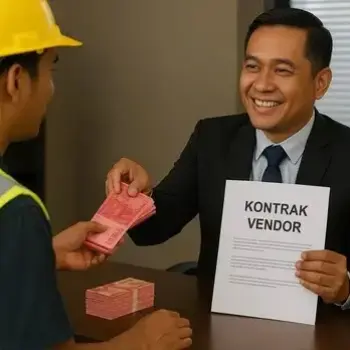
If every question is met with legal threats, then what is actually being defended is not truth, but authoritarian secrecy and hypocrisy.
And social history consistently shows a similar pattern:
When transparency is considered dangerous, it's usually not honor that's being defended, but the discomfort of explaining, because there's an indication of something going on behind the scenes.
FAQ
1. Does asking about the use of funds violate the ITE Law?
No. Reasonable inquiries about the transparency of funds are not a violation of the law. What can become a problem is if someone makes accusations or slanders without evidence.
2. Why do people often threaten with the ITE Law?
Often due to ignorance of the law or as a way to stop an uncomfortable discussion.
3. What is the difference between criticism and defamation?
Criticism focuses on actions or policies, while defamation usually involves baseless accusations that damage a reputation.
4. What should you do if you are threatened with the ITE Law?
Remain calm, preserve evidence of the conversation, and ensure your discussion is fact-based and does not contain baseless accusations. Report the threat to the authorities and, if possible, make it viral on social media.
5. Is the threat "I am a legal person" legally binding?
NO. A person's status does not automatically determine the truth or falsity of a statement. In law, what is assessed is the facts, evidence, and elements of the article, not whoever most strongly mentions the law.
6. Why do many residents refuse to ask about reports on the use of neighborhood funds?
In many communities, whether at the neighborhood level (RT/RW), housing units, or residential management levels like P3SRS, this phenomenon is actually quite common. Interestingly, upon closer inspection, the reasons residents give for not asking typically revolve around three main reasons.
a. Fear
Some residents worry about being seen as causing trouble, being labeled as "uncooperative," or even being intimidated by legal threats such as the Electronic Information and Transactions Law (UU ITE). In situations like this, many people choose to remain silent to maintain social order, even though they actually have legitimate questions.
b. Ignorance
Many residents are unaware that they have the right to know reports on the use of joint funds. They assume that these reports are solely the responsibility of the management or committee. However, in healthy organizational governance, reports are actually prepared for the knowledge of members or contributing residents.
c. Becoming part of a group that benefits from the situation
There are also situations where some people choose not to ask questions because they are in the same circle as those who manage or benefit from the funds. In situations like this, silence is no longer due to fear or ignorance, but because the status quo is considered more palatable and profitable to maintain.
These three factors often form an interesting social pattern:
When no one asks questions, transparency is never tested.
And when transparency is never tested, trust slowly degenerates into mere habit and justification, no longer the result of real openness.
Read other articles too:
- The Mystery of Invisible Power in Community Management
- The Phenomenon of Utilizing Shared Public Spaces
- Project Transparency in the Community
- The Role of Buzzers in the Community