

Market Facts That Unit Owners Often Ignore
Many people still believe the same old myths: "Property Will Always Increase in Value", "Location...Location...Location", “In the City Center” and many others.
However, the market doesn't operate on myths, but rather on the management, maintenance, and care of the owners.
The past five years have provided a bitter but true lesson:
- While gold prices have risen consistently,
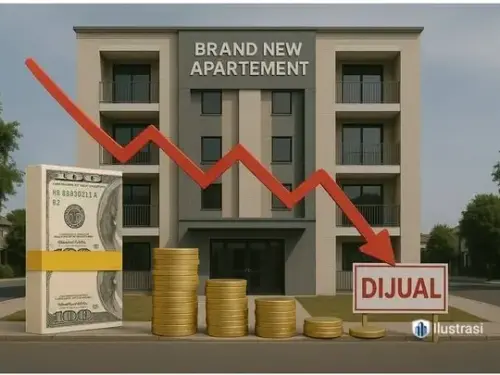
- many properties have stagnated, even declining in real terms, especially those that are poorly maintained and managed.
To understand this rationally, we need to return to classical investment principles.
Irving Kahn's Perspective: Investments Should Be Businesslike, Not Assumptuous
Legendary investor and protean value investor, Irving Kahn, once said:
“Investing is most intelligent when it is most businesslike.”
This means that intelligent investing is not about following trends or inherited assumptions, but about:
- Understanding fundamental value,
- calculating real risk,
- and assessing how the asset is managed.
With this approach, let's compare gold and property—not with opinion, but with data and business logic.
Market Performance Over the Last 5 Years: Gold vs. Property
Gold: Always Outperforming Amid Volatility
In the last 5 years, gold has shown solid performance:
- Global CAGR has been around ±16% per year in some periods.
- cumulative price increases have reached ±65% in many markets.
Main characters of gold:
- It doesn't generate passive income.
- but it is a very strong hedge against inflation and global uncertainty.
- high liquidity and low cost of ownership.
The value of gold does not depend on one manager, one location, or one human decision.
Property: Not All Rise, Many Are Eroded
In contrast, properties exhibit a much more varied performance:
- The average historical CAGR is only ±5–7% per year, and
- in many locations, it has stagnated or declined drastically in real terms after inflation.
Property benefits do exist:
- Potential rental income.
- True utility (residential or business).
But other real challenges owners often overlook:
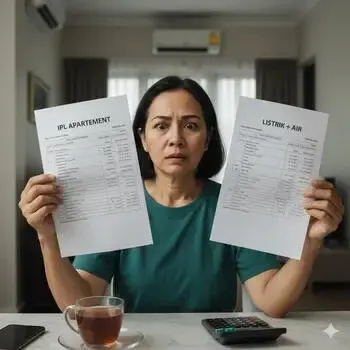
- IPL fees, sinking fund, taxes, and maintenance.
- Low liquidity.
- And most crucially, total dependence on management quality.
Real Simulation: Rp1 Billion Capital for 5 Years
Scenario A: Gold Investment
Conservative assumptions:
- an average increase of 12% per year.
- without significant maintenance costs.
Simulation results:
IDR 1,000,000,000 → ± IDR 1,760,000,000
Gold advantages:
- No hassle.
- No management conflicts.
- The value cannot be "damaged" due to mismanagement by other parties.
Scenario B: Property Investment (Apartment)
Realistic Data
- Capital gain of approximately 4% per year.
- excluding annual fees and vacancy risk.
Simulation results:
Rp1.000.000.000 → ±Rp1.220.000.000
And that too:
- Maintenance costs have not been deducted.
- Renovation costs.
- Leasehold periods.
- And the building's reputation has declined.
In real terms, the increase could be less than inflation.
“When It Rains, It Pours”: The Multi-Layered Risks of Property
Property issues aren't just about location, but also about management and owner awareness.
Property values can plummet even when the economy isn't in crisis when:
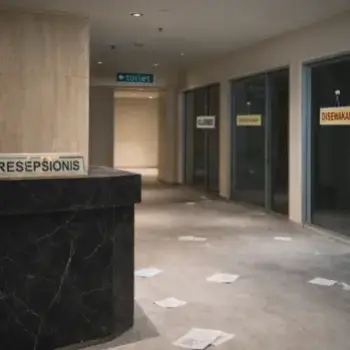
- Elevators frequently break down.
- Deteriorating facilities.
- Dreamish buildings.
- Non-transparent financial reports.
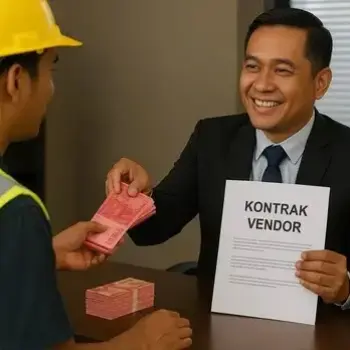
- Secret vendor contracts.
- Suspected hidden commitment fees, such as insurance agents, BTS rentals, and others.
- IPL increases but quality declines.
Then it is made worse by:
- Passive owner.
- Never reads financial statements.
- Doesn't know audit results.
- Doesn't understand elevator contracts, generators, or insurance pricing schemes.
The end result:
- Buyers backed out.
- Prices were depressed.
- Bank appraisals dropped.
- Values fell, then fell further.
- Renters and rents fell further.
This is the effect of “when it rains, it pours.”
Property is not a passive investment, but an active investment.
Unlike gold, property requires the active involvement of the owner.
Maintaining property value means that owners must:
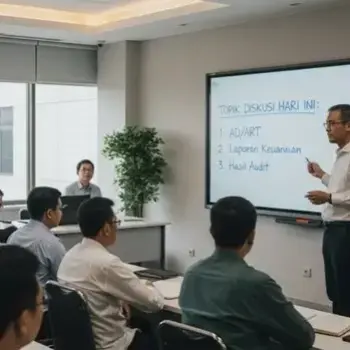
- Actively ask questions about financial reports.
- Understand the contents of financial reports.
- Request and understand audit results.
- Understand elevator, generator, and maintenance contracts.
- Understand insurance agent fees.
- Ensure there are no conflicts of interest (e.g., the domicile of the administrator's ID card) or hidden fees.
Just think about it: If the owner doesn't care, who else will?
Important Lessons from the Market Over the Last 5 Years
The market teaches one hard law:
Asset value is not maintained by good intentions, but by systems and controls.
- The value of gold is maintained by the global market.
- The value of property is maintained and determined by others, in this case the P3SRS management.
Without control and care, property is not a safe asset—
but rather a volatile asset that slowly erodes wealth.
Conclusion: Which is More Profitable for a Capital of IDR 1 Billion?
The facts of the last 5 years show:
- While gold excels in value appreciation and peace of mind.
- property often loses, especially if not managed and monitored seriously.
A property is profitable only if and only if:
- Transparent management,
- owners actively ask about transparency of vendor documents and contracts,
- reasonable costs,
- consistent asset maintenance.
Without it, property turns from an investment into a long-term, expensive liability.
FAQ
1. Does property always lose to gold?
Not always. However, without active maintenance and oversight, property almost certainly loses in real terms.
2. Who is responsible for maintaining property value?
The manager runs operations, while the owner maintains direction, control, and accountability.
3. Why should owners care about financial statements and audits?
Because financial statements determine cost stability, the building's reputation, and the value of the units.
4. What are the impacts of passive owners?
Unit values decline, they are difficult to sell, and bank appraisals weaken.
5. What is the biggest mistake property investors make?
Thinking property is a passive investment.
But without the owner's attention, its value can slowly and surely decline!
Read other articles too:
- P3SRS Financial Reports Are Not Dogma: Here's How to Understand Them Correctly
- IHSG-IDX Plummets January-February 2026 Due to a Confidence Crisis
- Uncovering Apartment Financial Report Tricks