

Becoming Authoritarian Arrogance, Legalized by Citizens' Indifference
The use of shared spaces, facilities, and even public roads in residential communities such as neighborhood associations (RT/RW) or apartment complexes often triggers a classic conflict:
Do community administrators, such as the RT/RW and the Community Development and Community Empowerment Agency (P3SRS), have the right to make their own decisions, or are they required to hold a meeting first?
This question seems simple, but the answer will expose the rotten governance of the communities around us:
Ironically, many residents complain loudly behind closed doors, but choose to remain silent during the election process. Such arrogance doesn't emerge suddenly; it is actually supported by the voters themselves.
This is where the problem begins.
Also read other articles:
Shared Space Does Not Belong to the Administrators, But is a Collective Right
In the concept of apartments and social housing communities, common areas, common facilities, and common land belong collectively to all owners, not to the administrators.
The administrators, both the neighborhood association (RT/RW) and the community service (P3SRS), are merely mandated, not owners.
The mandate is given to manage, not control.
When administrators begin to feel entitled to make their own decisions, this is where authoritarian arrogance flourishes:
- Who can use the space?
- For what event?
- How much is the "donation"?
- To whom and where does the money go?
then what happens is not management, but rather a shift from mandate to absolute power without supervision.
Prerogative: A Commonly Abused Myth
In principle, there is no absolute prerogative in managing shared spaces.
The administrator's authority is strictly limited by:
- Articles of Association.
- Internal regulations and standard operating procedures.
- Member/owner meeting decisions.
If the Articles of Association/Bylaws stipulate that shared space can be used for certain activities, including commercial activities, then the management may carry it out, provided that:
- Transparent.
- Accountable.
- Having financial reports that make sense numerically.
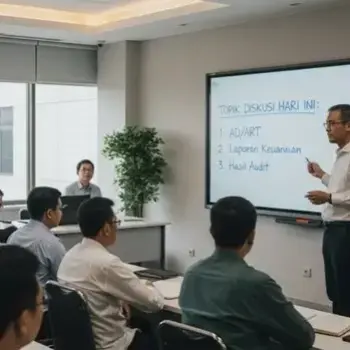
However, if the Articles of Association (AD/ART) are absent, unclear, or intentionally left unclear, then:
Any use of shared space with broad impacts must be formulated and approved through a meeting before implementation.
There are no legitimate shortcuts in co-housing governance.
If the Articles of Association (AD/ART) are unavailable for a long period of time, residents should question the procedures for selecting administrators, standard operating procedures (SOPs), and other regulations, and why this is happening.
This is to prevent the erosion of transparency and orderly administration, which could ultimately be exploited by certain groups for their own monthly income.
Bazaars, Events, Advertising and Utilization of Public Spaces:
Bazaars, events, advertising, venue rentals, and the use of public spaces are often promoted as social activities. But let's be intellectually honest.
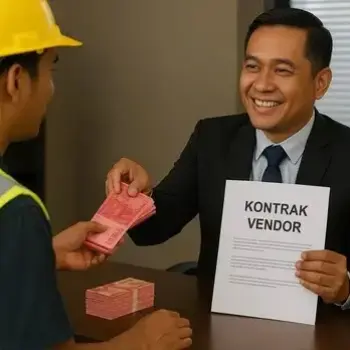
We often see the use of public spaces suddenly approved by certain administrators, without other residents knowing the contractual agreement or the revenue generated for the community. This occurs because of social narratives used, such as "For the sake of togetherness," "Maintaining brotherhood," "Improving social relations," and so on. However, in practice, these are all commercial activities that generate income.
In practice, bazaars, events, advertising, venue rentals, and the use of public spaces almost always contain elements of:
- Stall rentals.
- Buy-sell transactions.
- Cash flow.
- Potential profits.
- Non-transparent fees.
- Impact on cleanliness, safety, and comfort.
If there's money circulating, it's a commercial activity, not a social one, even if it's disguised as charity, social activity, or community service.
Therefore, bazaars, events, advertising, venue rentals, and the use of public spaces must not proceed without a clear internal legal basis, which should be written down in a contract such as:
- Location and duration.
- Rates or contributions.
- Cleanliness and security management.
- Financial reports that can be tested logically using numbers, not just narratives.
A Chain of Problems Often Ignored by Citizens
Let's sort it out honestly, without emotion:
Administrators can act in an absolute authoritarian manner because:
The election process is not transparent; it can be said that they elect themselves.
Elections are not transparent because:
Citizens don't care, don't show up, or feel "it's none of my business."
Citizens' indifference to rules and processes will be paid dearly by:
Ultimately, they are shocked when their power is abused.
So, rationally:
This phenomenon of arrogant power is the result of indifference, collectively created by citizens. It is not the will or creation of any particular administrator, but rather a pattern of power that grows out of a lack of collective participation and transparency.
Citizens who ignore rules and transparency have no moral basis to complain when the impact returns to them.
This is not a defense of deviant administrators.
It is a reminder that poor governance always arises from a lack of participation.
Why Should It Be Closed?
Meetings are not a formality, but a means of legitimizing togetherness.
Without meetings and agreements, then:
- Policies are easily challenged.
- Conflict is inevitable.
- Trust is crumbling.
The meeting will always ensure:
- Decisions are based on collective responsibility.
- Benefits are shared equitably.
- Management remains within its mandate.
Risk of Unilateral Decisions
Unilateral decisions open the door to:
- Suspicions of abuse of authority.
- Unclear income.
- Unverified financial reports.
- Horizontal conflicts between residents.
Even more dangerous, a unilateral decision would create a precedent:
that power can be exercised without consent.
Principles of Healthy Governance in Residential Environments
Healthy shared space management must be based on:
- Transparency.
- Accountability.
- Participation.
- Fairness for all members/rights holders.
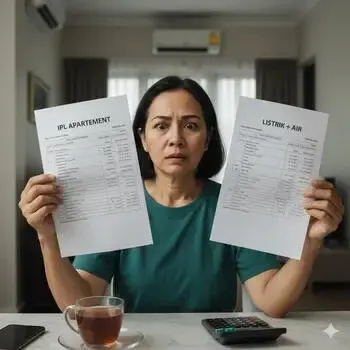
Every income, regardless of its name, must be deposited into the joint treasury and reported transparently. Therefore, it's unreasonable to claim that "it's just a small amount," which is not the point.
It shouldn't just be announced; it should be verified numerically.
Conclusion: This is a Mandate, Not Power
Shared public spaces are not tools of power for administrators; they are a collective trust.
Bazaars, events, advertising, space rentals, use of public spaces, and similar activities are permitted, but must not be conducted outside of meeting procedures, written regulations, and reasonable reporting.
And to residents/owners:
If you ignore the process of selecting administrators, including neighborhood associations (RT/RW) and community leaders (P3SRS), and don't care about transparency today, don't be surprised if tomorrow you are merely a bystander to decisions that are detrimental to you.
FAQ
1. Does all use of common space require a meeting?
Not always. If the Articles of Association or Standard Operating Procedures (SOPs) are clear and agreed upon beforehand, the management can proceed without a new meeting. However, for commercial or broad-impact activities, meetings remain the best practice.
2. Is income from the use of common space mandatory to be reported?
Mandatory. If any money comes in from the use of common space, regardless of the term, transparent financial reporting is mandatory.
3. May the management determine the amount of contributions from the use of common space?
Not unilaterally. The amount of the contribution must be based on rules or collective agreement to prevent it from becoming a hidden levy and indicating personal income.
4. What can residents do if the management refuses transparency?
Residents have the right to request a written report, request a meeting, and use the oversight mechanisms stipulated in the Articles of Association or report it to the authorities.
5. Why are residents also responsible for this problem?
Because the management emerged from a process that residents ignored. Indifference to transparent election of administrators is a real contribution to the birth of uncontrolled power.
Read other articles too:
- The Mystery of Invisible Power in Community Management
- Project Transparency in the Community
- The Role of Buzzers in the Community