
Do Not Just Demand Your Rights. Understand Your Shared Responsibilities, Too
Low Resident Awareness and Understanding as a Source of Problems in Apartment Communities
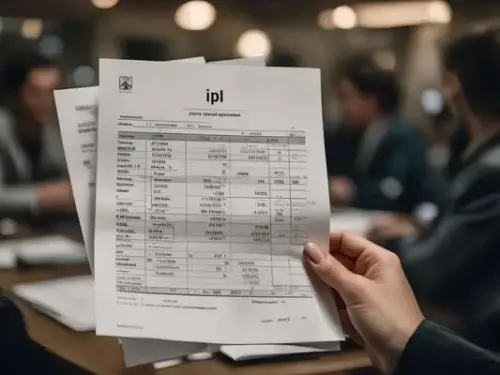
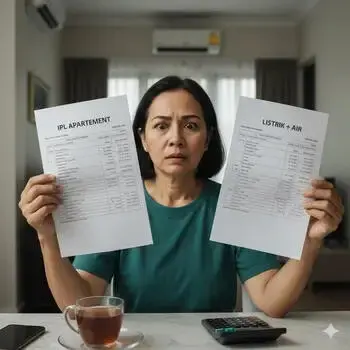
Living in an apartment is not simply about owning a unit, paying the Environmental Management Fee (IPL), and settling electricity and water bills every month. Apartment living also means sharing an environment with many people who have different habits, interests, and backgrounds. Therefore, everyone needs to understand that each resident has both rights and responsibilities in maintaining order, comfort, and the interests of the community.
Unfortunately, not everyone understands this balance. Some residents feel that almost everything is their right but fail to recognize that those rights have limits. Others assume that their responsibilities end once all monthly bills have been paid. In reality, community living in an apartment requires far more responsibility than simply making payments.
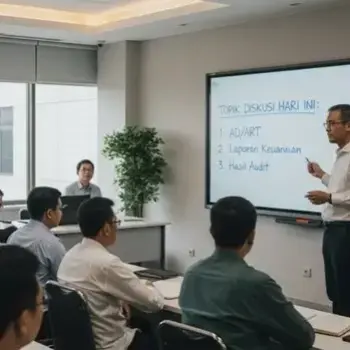
These problems often begin with residents' lack of interest in reading and understanding the Articles of Association and Bylaws (AD/ART), resident rules, shared-facility regulations, and other provisions applicable to the apartment community. These documents are often considered unimportant, overly formal, or matters that concern only the management committee and the building management.

As a result, some residents live in the apartment based solely on their personal understanding. They assume that something is permissible as long as nobody prohibits it, or believe that every inconvenience they encounter must immediately be handed over to Building Management (BM). However, community living cannot function properly if everyone relies only on personal judgment and leaves every problem to someone else.
Residents' Rights Do Not Mean They Can Do Whatever They Want
Every apartment owner and resident has the right to enjoy a safe, comfortable, clean, and orderly environment. Residents are entitled to use shared facilities for their intended purposes, submit complaints, obtain information to which they are entitled, and receive management services in accordance with applicable rules.
However, these rights do not mean that anyone is free to do whatever they want without considering the interests of others. The use of shared facilities must take into account their intended purposes, applicable rules, and the comfort of fellow residents.
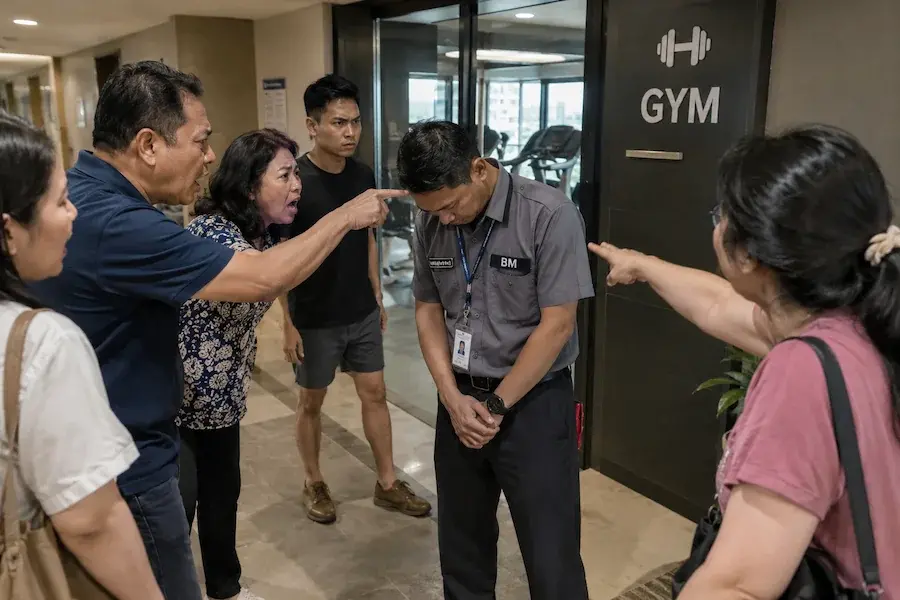
For example, a resident uses the apartment gym while playing music at an excessively high volume. When other residents feel disturbed, the person argues that they have the right to use the gym because they have paid the IPL.
This understanding needs to be corrected. Paying the IPL does not mean purchasing unlimited freedom to use shared facilities. The right to use the gym does not give anyone the right to control the gym's atmosphere according to personal preferences. Facility use must still respect the rights of other residents, who also pay the IPL and are entitled to enjoy the same facilities.
However, the balance between rights and responsibilities also applies to residents who feel disturbed. If a resident hears excessively loud music in the gym, they should not immediately hand the matter over to BM without first attempting a polite reminder, provided the situation is safe and circumstances allow it. Reminding someone whose behavior disrupts the comfort of others is an expression of care and social responsibility. Residents have the right to enjoy the gym comfortably, but they also have a responsibility to help maintain that comfort for everyone. Accordingly, the person playing loud music should respect others, while those who are disturbed should also take an active role in addressing the issue politely. If the reminder is ignored or the situation could lead to conflict, BM or the appropriate authority should then be involved in accordance with established procedures. This approach helps balance rights and responsibilities while preventing BM from having to act as an intermediary in every minor dispute that residents could resolve directly.
If the rules specify noise limits or restrictions on audio equipment, those provisions must be followed. Even when no specific rule addresses music volume, consideration and respect for others remain essential to community living.
Therefore, the issue is not simply whether playing music is allowed. The real question is whether a person understands that personal rights must be exercised while respecting the rights of others.
Paying the IPL Does Not Mean All Resident Responsibilities Have Been Fulfilled
Another common misconception is that residents' only responsibilities are paying the IPL, electricity bills, and water bills. Once these payments have been made, some residents believe they have no further obligations to their apartment community.
In reality, these payments represent only part of their financial responsibilities. Residents must also comply with community rules, maintain cleanliness, use shared facilities responsibly, respect fellow residents, and avoid behavior that disrupts public order.
These responsibilities do not always require money. Many simply require awareness, consideration, and a willingness to act sensibly.
For example, disposing of rubbish properly does not require additional spending beyond the obligations already established. Keeping noise levels low enough not to disturb others requires no budget either. The same applies to politely reminding someone who behaves inappropriately, provided it can be done safely.
These simple actions have a significant impact on the quality of apartment living. Even a building with excellent facilities can feel uncomfortable if its residents do not care about the interests of the community.
An apartment is not merely a collection of separate units occupied by individuals living independently. It is a shared environment where many people use common facilities and spaces. Therefore, the quality of life within an apartment is determined not only by the performance of the management committee and BM, but also by the behavior of every resident.
Not Every Problem Needs to Be Handed Over to Building Management
One habit that needs to be reconsidered is the tendency to hand almost every minor issue over to BM. When residents see someone littering, making excessive noise, or using shared facilities improperly, some immediately report the matter to BM without first attempting a simple, polite reminder.
Of course, BM plays an important role in apartment operations. The management team performs its duties within the scope of its work, contractual obligations, assigned responsibilities, and authority. However, this does not mean that every behavioral issue between residents must always become BM's responsibility.
Consider the example of someone playing excessively loud music in the gym. When another resident feels disturbed, the most reasonable first step is to express their concern politely to the person involved, provided the situation is safe and circumstances allow it.
They can explain that the music volume is disturbing other gym users and ask the person to turn it down. This approach is often sufficient to resolve the problem without requiring a formal complaint.
The same principle applies when someone litters in a shared area. If circumstances allow, residents can remind the person directly that rubbish should be disposed of in the designated bins.
Why should every minor issue be passed on to BM when residents themselves can help resolve it sensibly?
Of course, not every problem should be handled directly by residents. If a reminder is ignored, the violation continues, a conflict develops, or the matter involves safety and security, involving BM or the appropriate authority may be the right course of action. Residents should also never put themselves at risk by confronting someone who may become violent or intimidating.
The point is not to diminish BM's role, but to ensure that it is exercised appropriately. BM should be able to focus on its operational duties without constantly being interrupted or expected to mediate every minor issue that could be resolved through communication between residents.
Reminding One Another Is Part of Our Shared Responsibility
Community living requires genuine concern for others. If everyone chooses to remain silent when witnessing minor violations, such behavior can gradually become the norm. Over time, an environment that should be orderly may become a place where everyone acts as they please.
Conversely, when residents make a habit of reminding one another politely, many problems can be resolved before they escalate into more serious conflicts.
Reminding others does not mean claiming to be morally superior or taking over the management committee's authority. It is an expression of concern for the shared environment. Naturally, reminders should be delivered respectfully, without humiliating anyone in public or turning the interaction into an attempt to pass judgment.
There is a significant difference between correcting behavior to improve a situation and reprimanding someone to embarrass them. The former helps build a better community, while the latter can provoke arguments.
Residents must therefore understand that concern for others should be accompanied by good judgment. If a problem can be resolved through a brief, polite conversation, there is no need to escalate it immediately. However, if the matter involves a serious violation or cannot be resolved directly, the established reporting procedures should still be followed.
In this way, residents become more than recipients of services. They also contribute to maintaining the quality of community life.
The AD/ART Is Not Merely a Formality
One of the most fundamental ways to reduce these problems is to encourage residents to read and understand the AD/ART and other documents applicable to their apartment community.
The AD/ART is not merely an organizational document kept by the management committee. It contains provisions concerning the organization, membership, authority, decision-making procedures, and other matters specified in the relevant documents. Meanwhile, resident rules and shared-facility regulations provide guidance on the conduct expected of residents.
Residents also need to understand the distinct roles of owners and residents, the Supervisory Board, the Management Board of the Association of Owners and Residents of Condominium Units (PPPSRS), and BM. Each party's specific authority must be determined by the AD/ART, applicable regulations, organizational decisions, and the scope of the management company's assigned duties.
This understanding is essential so that residents know where to direct particular concerns, who has the authority to make decisions, and which matters can be resolved through mutual consideration among residents.
Without this understanding, residents may assign responsibilities to the wrong party. Minor behavioral issues may be treated as BM's responsibility, organizational policy disputes may be directed at operational staff, or personal obligations may mistakenly be regarded as the management committee's responsibility.
Furthermore, a lack of interest in reading these documents makes it difficult for residents to distinguish between rights that are actually established by the rules and personal preferences that they assume to be rights. As a result, disputes often arise not because no rules exist, but because the people involved do not know or understand the rules already in place.
Reading these documents is not solely the concern of the management committee or residents who actively participate in the organization. Everyone should understand them to exercise their rights and fulfill their responsibilities properly.
Resident Awareness and Understanding Determine the Quality of Apartment Life
Resident literacy in an apartment community involves more than the ability to read documents. It also means understanding their contents and applying them in everyday life.
Residents with a good understanding of the rules do not automatically treat every personal preference as a right. They check the applicable provisions, consider the interests of others, and understand the limits of their own authority.
Similarly, when problems arise, they do not automatically assume that the management committee or BM must resolve everything. They first assess whether the issue can be resolved directly, requires assistance from the management team, or should be referred to the Management Board or Supervisory Board, depending on the nature of the problem.
This approach creates healthier relationships between residents. Minor issues do not need to develop into prolonged disputes. BM can focus more effectively on its operational duties, while the Management Board and Supervisory Board can perform their respective functions within their authority.
Conversely, a lack of understanding creates unnecessary burdens. The same complaints recur, relationships between residents deteriorate, and management staff spend time dealing with problems that could have been prevented through communication and mutual consideration.
Ultimately, the management fees paid by residents do not automatically produce an orderly and comfortable environment. The quality of apartment life also depends on the awareness and behavior of its residents.
Start with Simple Actions: Understand Your Own Rights and Responsibilities
Creating a better apartment community does not necessarily require major meetings, policy changes, or additional staff. Many improvements can begin with simple actions practiced every day.
Residents can start by reading the AD/ART and community rules, understanding the requirements for using shared facilities, maintaining cleanliness, respecting the comfort of others, and politely addressing minor violations when they occur.
The Management Board and Supervisory Board should also help residents improve their understanding by making documents accessible in accordance with applicable provisions, explaining frequently misunderstood rules, and ensuring that each party's role is clearly understood. BM can support these efforts by providing operational information and clear complaint-handling procedures.
These steps do not mean that residents must resolve every problem themselves. Some issues require technical expertise, management authority, organizational decisions, or intervention by the appropriate authorities. However, each party must fulfill its responsibilities appropriately rather than shifting problems to others or placing the entire burden on a single party.
This awareness needs to become part of everyday life. When someone litters, residents who can safely do so may offer a reminder. When music is too loud in the gym, they can ask for the volume to be lowered. When a problem remains unresolved or involves a serious violation, the appropriate reporting and resolution procedures should be used.
These actions may seem simple, but their impact can be substantial when practiced consistently.
A Comfortable Apartment Community Is Built by Responsible Residents
Rights and responsibilities cannot be separated in community living. Residents have the right to enjoy a comfortable environment, but they also have a responsibility to respect the comfort of others. They have the right to use shared facilities, but they must use them properly. They are entitled to management services, but that does not mean every everyday issue must be handed over to BM.
All of this requires an understanding that an apartment is not merely a place to demand services. It is also a shared environment that every resident has a role in maintaining.
A lack of interest in reading the AD/ART, community rules, and related regulations can lead residents to misunderstand their rights, responsibilities, and the division of duties. Improving resident literacy is therefore not merely an administrative matter. It is an essential part of building an orderly and harmonious apartment community.
Do not just ask, “What are my rights as an apartment resident?” Also ask, “What have I done to protect the rights of other residents?”
A comfortable apartment community is not built solely through the work of the Management Board, Supervisory Board, and BM. It also depends on residents who understand the rules, respect one another, and are willing to fulfill their responsibilities without always needing to be instructed or reminded.
Read other articles also:
- The Mystery of Invisible Power in Community Management
- Project Transparency in Communities
- Income Reports Without Expense Reports?
- The Role of Buzzers in Communities
- The Sleight of Hand in Community Expense Reports