

Social Illnesses Based on Hypocrisy in Housing
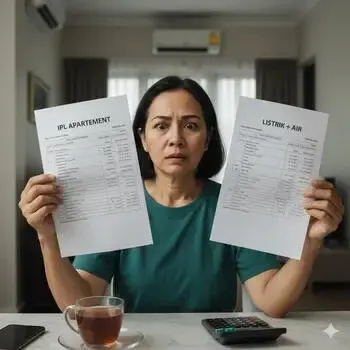
Housing isn't just about buying space; it's about buying responsibility. Every unit owner, whether in a horizontal area managed jointly by the neighborhood association (RT/RW) or in a vertical housing complex under the P3SRS (Planning for Community Empowerment) system, not only acquires property rights but also enters into a social system with collective rules and obligations. This includes regulations, an Environmental Management Fee (IPL), and joint decisions that bind all residents without exception.
Every resident has the right to security, access, cleanliness, and maintained investment value. However, these rights always go hand in hand with the obligation to contribute to the financing and maintenance of the environment. Ownership isn't just about personal space, but also a commitment to shared governance. There are no rights without contribution.
The issue of Environmental Management Fees (IPL) for vacant units/land almost always raises the classic debate:
"It's not occupied yet, why should we pay?"
This question sounds logical on the surface. However, when examined from the perspectives of law, social justice, and regional governance, the answer is consistent:
Vacant Units/Land are still required to pay IPL.
Moreover, attempts to avoid it are often not a matter of ignorance, but rather a social ploy to shift the burden onto other residents.
1. Legal Basis and Agreement: Obligation Not to Wait for Occupancy
When purchasing a unit in a housing complex or apartment, there is generally a Sales and Purchase Agreement (PPJB) or area management regulations that stipulate the obligation to pay contributions from the moment of handover.
These obligations include:
- Does not require the unit to be occupied.
- Does not depend on whether it has been built or not.
- Attached to ownership.
Once you become an owner, you enter the area's collective financing system.
This is where a simple principle applies:
The right to area facilities comes with the obligation to finance them.
No resident is above the law.
2. Logic of Justice: The Burden Must Not Be Moved Silently
If the owner of the Unit/Vacant Land is exempt from IPL, then:
- Security costs continue to be incurred.
- Roads are still maintained.
- Drains are still cleaned.
- Streetlights remain on.
So who pays?
The answer is simple: other residents.
This means that unilateral land acquisition creates inequality.
One party enjoys the value of the area, while the other bears its operational costs.
That's not mutual cooperation. It's forced subsidy, which is a social ill.
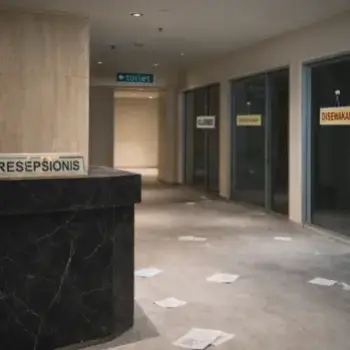
3. Vacant Units/Land Are Actually More Vulnerable, Logically the IPL Could Be Higher
This is a point that is rarely discussed honestly.
Vacant units/land have the potential to:
- It becomes a nest for wild animals.
- It becomes an illegal dumping ground.
- It encourages weeds and pests.
- It invites negative activity.
The risk of oversight is actually higher, not lower.
Logically, in area management, objects that are not actively monitored actually require:
- More regular patrols.
- Additional vegetation maintenance.
- Stricter access controls.
Therefore, the argument "if you don't use it, you don't pay" falls apart logically and from a risk management perspective.
4. Benefits Continue to Be Enjoyed, Even When Unoccupied
Owners of vacant units/land still enjoy:
- 24-hour security.
- Public street lighting.
- Maintained road access.
- Maintained drainage.
- Stable or increasing property values.
Investment value doesn't stand alone. It hinges on the quality of the area.
Those who choose not to pay the IPL still enjoy a clean environment, well-maintained road access, 24-hour security, and maintained property values, all of which are funded FREE by other compliant residents. They operate under the same system, enjoying the same benefits of mutual cooperation, but refuse to share in the costs.
This isn't about forgetting to pay. It's about enjoying collective benefits without sharing the collective burden.
Also read other articles:
5. Risk of IPL Arrears
Avoiding obligations may feel “saving” at first, but it carries risks:
- Administrative fines.
- Restrictions on area services.
- Obstacles to land title/renovation management.
- Obstacles when transferring ownership or selling a unit.
- Historical delinquency records that affect the reputation of the owner.
Avoiding obligations today could become a legal and administrative burden in the future.
6. It's About Social Ethics, Not Just Bills
Housing, whether vertical or horizontal, is a social system.
If everyone chooses to pay only when they feel they are "using" it, then:
- Damaged roads will never be repaired in a timely manner.
- Safety will be reduced.
- Regional standards will decline.
IPL is not a living fee, IPL is a fee for maintaining a shared standard of living and is jointly funded without exception by the RT/RT/P3SRS administrators.
Conclusion: Obligations Do Not Disappear Due to Unoccupancy
Unit/Tanah Kosong tetap bagian dari ekosistem kawasan.
Dan ekosistem hanya berjalan jika semua pemilik ikut berkontribusi.
Menghindari IPL bukan sekadar menghemat biaya, itu memindahkan tanggung jawab ke tetangga.
Dan dalam komunitas yang sehat, praktik seperti itu tidak bisa dinormalisasi, karena itu hanya trik mengelabui warga lain yang membayar IPL.
FAQ
1. Are vacant units/land still required to pay the IPL (Land Leasehold Rental)?
Yes. The obligation is based on ownership, not occupancy. As long as you are registered as the owner, your contribution to the area's management costs remains valid.
2. Why pay if it's not yet occupied?
Because public facilities, security, lighting, and area maintenance continue to operate daily. Your investment value is maintained, even if the unit is unoccupied.
3. Is it fair for vacant unit/land owners not to pay the IPL?
Some management officials do this, but this is irrational, as basic costs such as security and infrastructure remain. If one party is exempt, the burden automatically shifts to other residents.
4. Is it true that vacant units/land are actually riskier?
Yes, very risky. Vacant units/land have the potential to become nests for wild animals, illegal waste dumps, or hotspots for negative activity. Therefore, the need for supervision can be even higher.
5. What are the risks of not paying the IPL?
Administrative fines, restrictions on area services, obstacles to PBG/renovation processing, and even problems during sales transactions. Arrears can also be recorded in the ownership history.
6. Can someone hide behind their position (RT/RW/P3SRS) to avoid paying?
No. Position is an administrative mandate, not a financial privilege. In the principles of sound governance, no citizen is above the collective rule of law. If administrators avoid their obligations, this creates a conflict of interest and undermines the legitimacy of their own leadership.
7. What if someone pretends to be unaware of tax and legal regulations?
Ignorance is not a justification for avoiding obligations. Area regulations are usually written in the PPJB (Contract of Sale and Purchase) or environmental regulations. Claiming ignorance, even though the document has been signed, is not a legal argument; it is simply a social trick based on hypocrisy.
8. Is it possible that some parties are exploiting residents' ignorance?
Unfortunately, this is common. In communities with low legal literacy, there is always the risk of certain parties twisting the rules or spreading false narratives to shift their obligations to others. Therefore, document transparency and citizen education are crucial to prevent anyone from profiting from collective confusion.
9. Does failure to pay the IPL constitute a breach of contract or an unlawful act?
In principle, under civil law, yes, it does.
If the obligation to pay the IPL is stipulated in the PPJB, deed of sale, or agreed-upon zoning regulations, then failure to pay can be categorized as a breach of contract. This means that a contractual obligation has not been fulfilled.
Furthermore, if the deliberate avoidance of payment results in losses for the management or other residents, for example, by dividing the cost burden more heavily among the compliant party, then under certain circumstances it can be considered a form of unlawful act, as it involves elements of collective loss and injustice.
However, each case must be examined from the following perspective:
- Contents of the applicable agreement,
- Administrative evidence,
- Collection mechanisms and warnings that have been implemented.
Clearly, considering IPL as "optional" is not a strong legal position.
In a shared housing system, financial obligations are not merely a social etiquette, but rather a consequence of ownership that can be held accountable.
10. What is the solution if the person who fails to pay IPL is an official in the housing complex?
If the person who is in arrears with IPL is an official, whether at the neighborhood association (RT/RW) level or a P3SRS administrator, the approach must remain based on rules, not emotion.
Steps that can be taken include:
- Document in writing every obligation and arrears based on official data.
- Report this formally in a community discussion forum to register it as a collective issue, not a personal conflict.
- Report it to a higher structure according to the organizational hierarchy (for example, to the sub-district office for neighborhood associations (RT/RW), or to the relevant agency for P3SRS).
- Share it on social media, not to slander, but to encourage transparency.
- If there are indications of legal violations, take legal action according to applicable regulations, including reporting it to law enforcement with sufficient evidence.
Position is not a privilege free from obligation. In fact, the higher one's position in housing management, the greater their moral and administrative responsibilities.
In a healthy system, there is no "immunity to pay."
Because public trust is destroyed not when ordinary citizens are negligent, but when officials set the wrong example.
Read other articles too:
- The Mystery of Invisible Power in Community Management
- The Phenomenon of Utilizing Shared Public Spaces
- Project Transparency in the Community
- The Role of Buzzers in the Community